
26 Creator Highlights from the 2026 FIFA World Cup
I am not the only commentator who believes that creators won the 2026 FIFA Men's World Cup from a marketing standpoint.
Despite my being part of a chorus singing this song, perhaps you are not yet convinced. If so, allow me to share twenty-six highlights that may convince you of the power of the Team Brand Ambassador role in this year's cultural extravaganza disguised as a football tournament.
50,000 creators can't be wrong. Can they? That's how many influencers Unilever deployed across 120+ markets for its 35-brand World Cup assault for leading brands Dove, Axe, Rexona and more, all under one campaign banner.
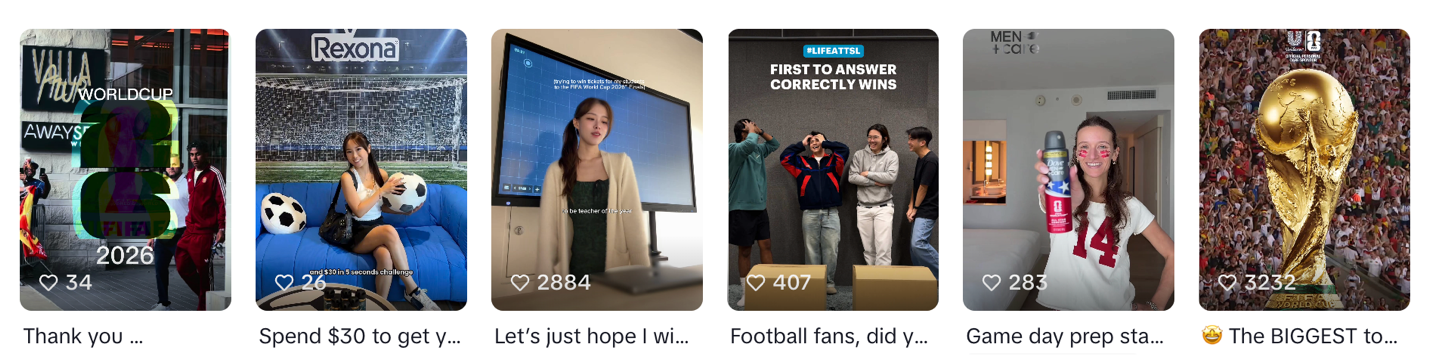
2. Who is this FIFA? They didn't just tolerate creators; they partnered with a platform to be one. TikTok became FIFA's first-ever "Preferred Platform," a deal that allowed creators to livestream match clips and gain press-level access.
3. $2 billion. That's the earned media value of the hashtag #FIFA alone, from more than a quarter-million creator posts in just the tournament's first three weeks. Wowza.
4. Don't try this at home. But if you stack #FIFA and #WorldCup together, you're at over $3.3 billion in EMV (earned media value) before counting a single dollar of official sponsorship media buys.
5. Adidas "won" the brand leaderboard among official partners, and they deployed a village to do it: $48.9M in EMV from 6.7k posts and nearly 3,000 creators.
6. Quality over quantity seems to fit with Michelob Ultra's brand image and their marketing approach. Ultra generated $11.5M EMV from just 947 posts and 346 creators, a fraction of Adidas's footprint, but most of the impact.
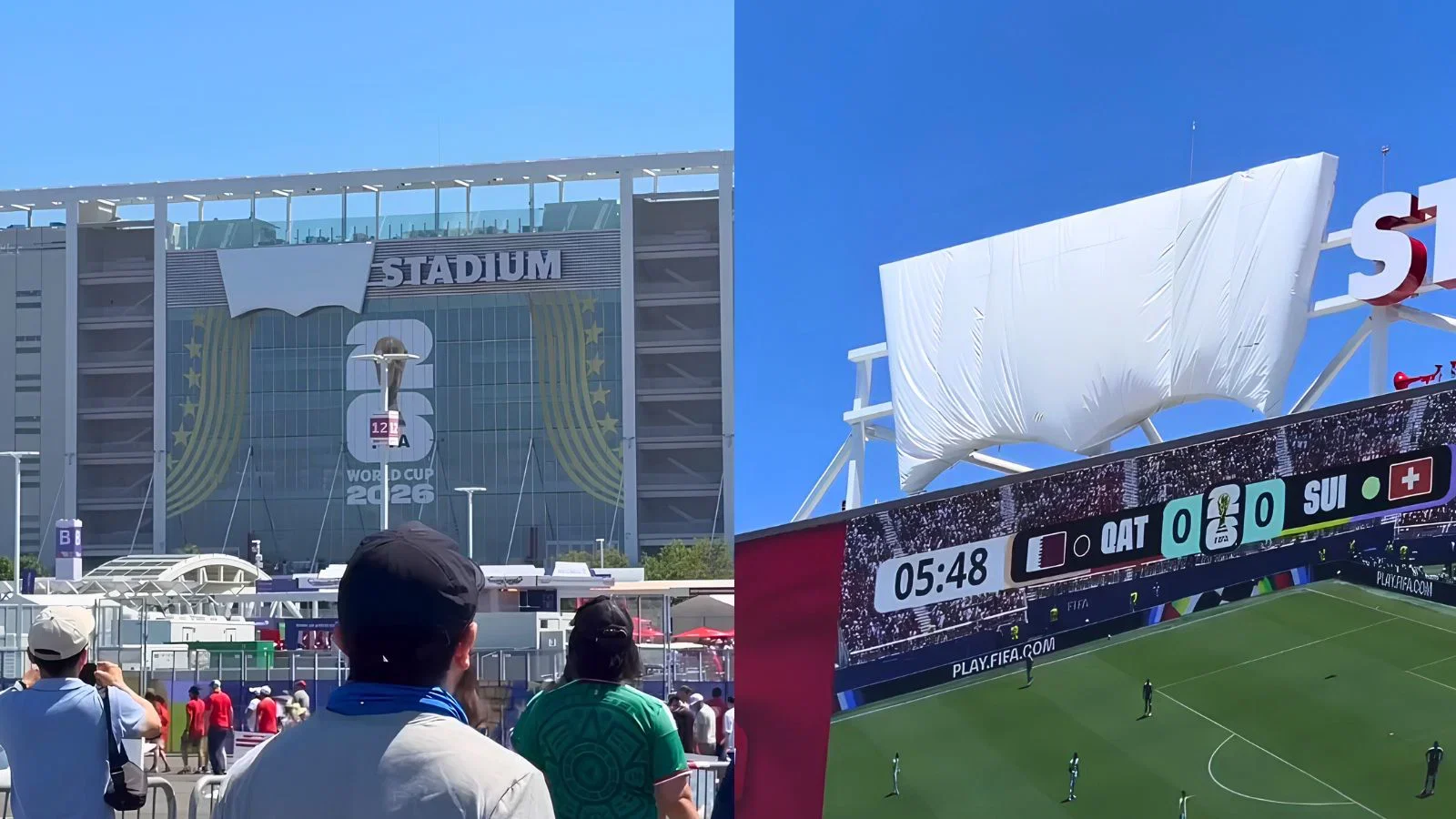
7. Levi's, a brand that was literally hidden from having a physical footprint and with no obvious business at a soccer tournament, pulled $6.5M EMV from 1,100 posts, outperforming several official sponsors. How many meetings going forward will CMO's be briefing their teams to secure their own Levi's moment ?
8. Messi's own 10 posts drove $2.5M EMV and 751 million impressions, more reach than most brands' entire quarter, from a single athlete's account. Of course, calling Messi an athlete does not do justice to his global impact. #GOAT.
9. The hashtag #Messi alone generated $245M in EMV organically, for free, more value than every tracked brand except the top five.
10. #Ronaldo ($155M) and #Mbappé ($89M) rounded out a trio of player hashtags that outperformed nine-figure ad budgets. Imagine the three of them in the same lineup on the pitch?
11. TikTok generated 10–25x the EMV of Instagram for comparable creator post counts throughout the tournament.
12. FIFA let creators actually play in the World Cup - sorta. The first-ever YouTube FIFA Creator Cup put iShowSpeed, Chad Ochocinco Johnson and PlaqueBoyMax on a pitch in Central Park; the livestream on FIFA's own channel pulled over a million views and over six million across all platforms.
13. Brazil's biggest World Cup broadcaster wasn't a network; it was a streamer that five years ago was not in the business. Casimiro Miguel's CazéTV held rights to all 104 matches; Globo, Brazil's dominant network for decades, showed 55.
14. CazéTV broke YouTube's all-time concurrent-viewer record three times in a row during the group stage: 12.7 million for the Morocco opener, 16 million against Haiti, 17.8 million against Scotland. The previous record, set by India's 2023 moon landing broadcast, was around 8 million. Remember CazéTV launched in 2022.
15. Six of the ten largest live broadcasts in YouTube's entire history now belong to a single Brazilian creator's channel. Greedy? Ha, no, just smart. Brilliant really.
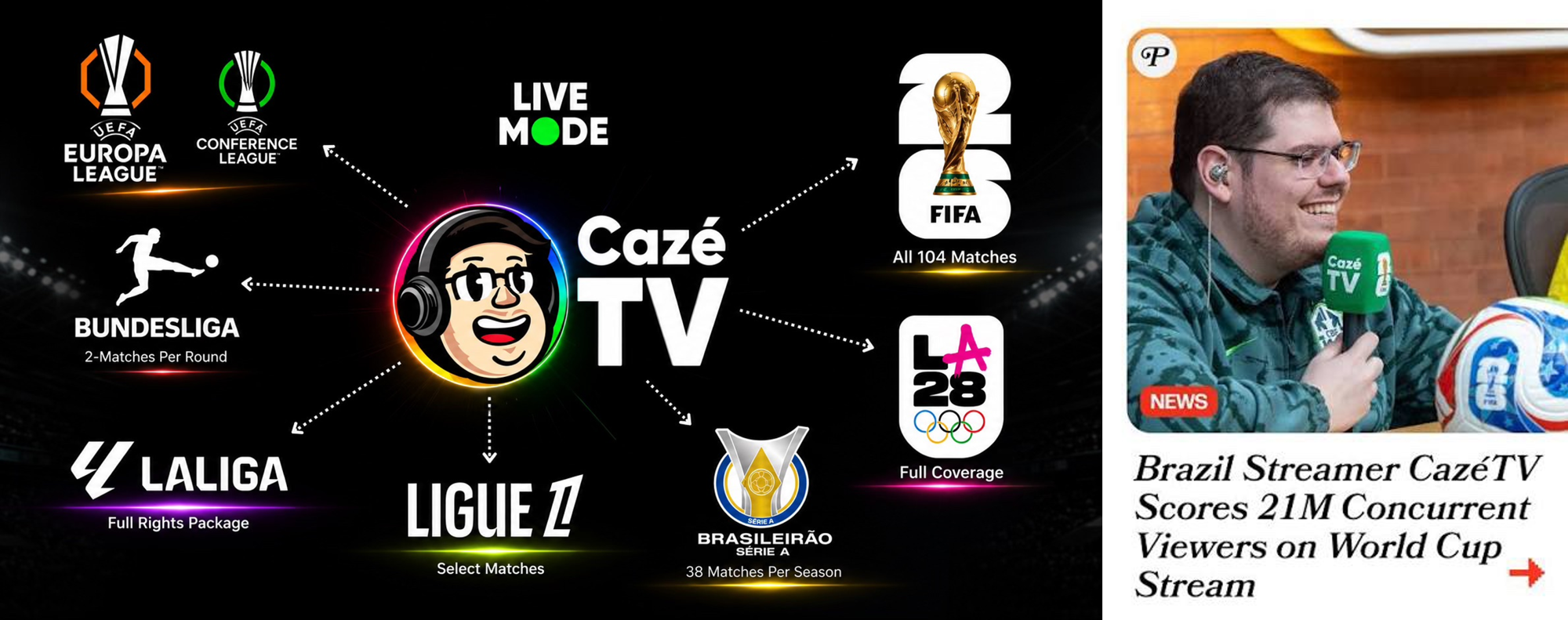
16. CazéTV signed 11 World Cup sponsors including Ambev, Coca-Cola, Itaú and Mercado Livre more than Globo's four, and Cristiano Ronaldo bought a stake in the channel's parent company in May. He may be slowing down on the pitch, but his investment acumen is still sharp.
16. CazéTV signed 11 World Cup sponsors including Ambev, Coca-Cola, Itaú and Mercado Livre more than Globo's four, and Cristiano Ronaldo bought a stake in the channel's parent company in May. He may be slowing down on the pitch, but his investment acumen is still sharp.
17. Zachery Dereniowski (@mdmotivator), a 27.9-million-follower Canadian creator with no soccer niche, gifted a Toronto family World Cup tickets and $10,000 in a filmed moment honouring the late Diogo Jota, alongside Portugal's Diogo Dalot. I get goosebumps just writing this. Watch the video.
18. Liam (@liamfp1), 700K+ subscribers, built brand deals with Adidas, Powerade and Axe, putting him directly inside Unilever's 50,000-creator, 35-brand World Cup activation before it even launched. Never heard of Liam? Follow him, and you will become as engaged as his followers.
19. DoorDash, Deliveroo and Wolt ran their first-ever joint global campaign, "Deliver Us To Fútbol," casting creator Khaby Lame alongside World Cup champion Kaká and USWNT star Alex Morgan in the same spot.
20. Duracell's Messi campaign was built by VaynerMedia, the agency best known for pioneering creator-first, social-native advertising rather than a traditional TV shop, and the tattoo-battery sweepstakes was designed to travel through fan social posts rather than broadcast alone, with over 100 winners drawn from entries submitted on social and at SoccerSweeps.Duracell.com.
21. Budweiser's Haaland bet paid off as a creator story more than an ad campaign: Haaland built a personal following of more than 60 million across platforms during the tournament including over 30 million followers gained on Chinese social platforms alone through goofy Snapchat vlogs and behind-the-scenes posts that marketers and outlets like Fortune began describing him as "one of football's most entertaining creators," not just an athlete.
22. Visa's World Cup push, "Tap In," cast creator-fluent talent like Jason Sudeikis alongside Lamine Yamal, Haaland, Christian Pulisic and broadcaster Andrés Cantor, building on Visa's Team Visa program, which explicitly trains its athletes in creator storytelling and social content production rather than treating them as passive campaign faces.
23. Nike's "Rip the Script" was engineered as a creator-media system, in contrast to a dated media approach around a hero ad spot: the six-minute hero film was designed as one entry point into roughly 185 additional short-form assets built specifically for creators to clip, remix and comment on across TikTok, Instagram and X throughout the tournament's 39 days.
24.Adidas's "Backyard Legends" skipped the traditional single hero-film launch for a 12-week rollout that opened with 42 autographed Polaroids posted directly to social; the film itself pulled 56M+ Instagram views, 4.7M+ TikTok views and 2.9M+ YouTube views
25. Unilever's creator strategy scaled down to hyper-local geographic targeting: in India alone, the company targeted creator representation across roughly 19,000 individual postal codes. Community-focused marketing is most powerful when it stays focused on the community.
26. TikTok creators covering the tournament, including Simone Scott and Cody Nguyen, were granted FIFA access once reserved for accredited press: training sessions, press conferences, warm-ups and field-side positions during matches.
The World Cup provided a thesis that many shared.
“Creator integration in cultural moments is undergoing a rapid metamorphosis from marketing-to-leverage to IP to brand management.”
-MH3