
There is no question that, as business leaders, we use an overwhelming amount of sports analogies.
Is that because so many business leaders come to their roles after occupying similar positions in their playing career, even if it was their high school team? Maybe it is because the language we learned on the pitch or the court easily translates to the business setting. The lessons we learn about teamwork and preparation have obvious transferences. Of course, the fact that sports ultimately is about winning and for better or for worse, so is business, makes the connections obvious.
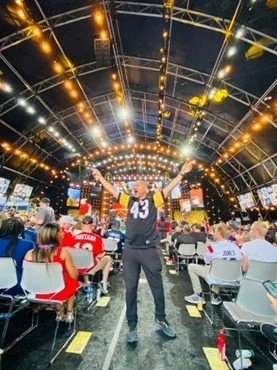
Mark Harrison @ NFL Draft
This week marks the start of NFL free agency, kicking off a crucial couple of months for teams to rebuild their rosters, assess their strengths and weaknesses, and plan for the 2026 season. Every team is out to learn how to replicate the Seattle Seahawks' magical run to the Super Bowl. Add a veteran but oft-maligned quarterback? Shuttle a star receiver and former starting quarterback to other teams. Sign an eleven-year veteran who can complement an already solid defensive line. Open up space for your emerging wide receiver to become the top of the league at his position. Fill out the holes in your roster with a trio of fifth-round draft pick rookies who all contributed more than their draft ranking.
If you are waiting for my business analogy, here it is.
I think there is an interesting perspective between building a team, any team, and how a brand builds its roster of sponsorship marketing partners.
Like a sports team, a brand has a capped budget that must be deployed optimally to achieve the best results. Each brand, like a team, has a current roster of players in its portfolio and future commercial goals. Brand leaders are tasked with evaluating their current portfolio to determine its effectiveness.
Is what we are doing working? Will it work in the future? What about our competition? What are they doing that may prompt us to consider new approaches? Often, brands evolve to better match changing consumer needs, tastes, and preferences. Just as sports evolve and transform, so do consumer desires.
Once they understand their gaps, brand leaders begin to look at how to fill them. They assess properties they have not collaborated on and pitch new opportunities. Using data analysis, consumer engagement, referrals, and sometimes gut instincts, they consider adjusting their lineup. In the NFL, that process starts this week, whether through free agency or with an eye on the upcoming draft in Pittsburgh in late April.

What was once art is now science, but, as with choosing a great sponsorship partner, there is an element of unpredictability that puts so much pressure on these decisions. In marketing or football, you can never be sure how your strategies are truly going to work until you deploy. The same can be said for predicting a team's success before the first whistle.
As you build your next roster of sponsor partners, think about each of your partners like a player. Who are the reliable veterans versus those who may have outlived their usefulness? Which partners are your opponents leveraging that you can outbid for? Or perhaps there is a hidden gem they are underutilizing? Take time to look at the emerging players you may find amazing value in by investing early and reaping the rewards.
I don't play Fantasy Football, but I know those of you who do will get the point of this discussion.
Mark Harrison is the founder of SponsorshipX